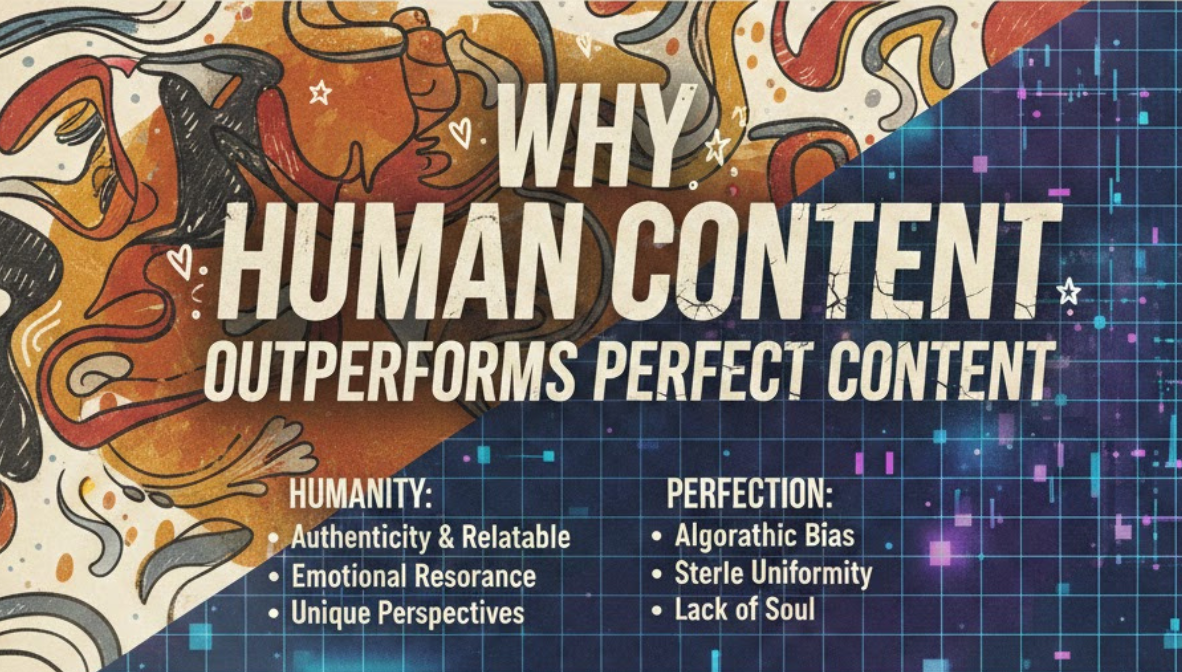
Why Human Content Outperforms Perfect Content
Introduction: When Flawless Isn’t Convincing Anymore
For years, content creators and brands chased perfection. Every sentence polished. Every visual refined. Every headline optimized for clicks. The assumption was simple: the more flawless the content, the more successful it would be.
But something changed.
In today’s digital landscape, audiences are exposed to more content than ever before. Perfectly structured posts, algorithm-friendly articles, highly edited videos they’re everywhere. And instead of building trust, this perfection often creates distance. People don’t just want content that looks good. They want content that feels real.
The Problem With Polished-Only Content
Perfect content often feels manufactured. It follows predictable patterns. The introduction hooks, the bullet points summarize, the conclusion wraps everything neatly. While this structure works technically, it can feel emotionally flat.
Audiences have become highly sensitive to formulaic writing. When something sounds too rehearsed, too optimized, or too certain, it triggers skepticism. It feels written for the algorithm, not for the person reading it.
Human content, on the other hand, allows room for nuance. It acknowledges complexity. It doesn’t rush to conclusions. It leaves space for reflection. And that space builds trust.
Expression Over Optimization
Modern audiences value expression over perfection. They want to feel that a real person is behind the message someone thinking, questioning, and communicating intentionally.
This shift extends beyond writing into audio and multimedia formats as well. Tools like text to speech allow creators to transform written ideas into natural-sounding voiceovers without overproducing or overcomplicating delivery. The key isn’t flawless production it’s clarity and authenticity.
The more content feels accessible and human, the more audiences engage with it.
Why Relatability Builds Trust Faster Than Authority
Authority used to be built through certainty. Strong claims. Clear directives. Confident tone. But today, relatability often builds deeper trust than authority alone.
When content admits uncertainty or shares perspective rather than presenting rigid answers, readers feel included. They feel respected. They feel understood.
Human content doesn’t pretend to have every answer. It explores. It explains. It invites dialogue instead of delivering verdicts.
That difference matters.
The Emotional Intelligence Factor
Human content demonstrates emotional intelligence. It understands context. It considers how the reader might be feeling. It avoids exaggeration and manipulative urgency.
Perfect content often prioritizes performance metrics clicks, conversions, shares. Human content prioritizes connection.
And connection leads to long-term engagement.
Audiences remember how something made them feel far longer than how technically flawless it was.
Algorithms Are Learning From Humans
Interestingly, even algorithms are adapting to this shift. Platforms now prioritize engagement depth over surface-level metrics. Time spent, meaningful comments, and sustained interaction carry more weight than quick clicks.
Human content naturally performs better in this environment. It encourages readers to pause. To think. To respond.
Perfection might capture attention briefly. Humanity holds it.
The Fear of Imperfection Is Outdated
Many creators still hesitate to publish unless everything feels polished. They fear mistakes. They fear criticism. They fear not sounding “professional.”
But the definition of professional has evolved.
Professional no longer means distant or overly formal. It means clear, thoughtful, and intentional. Minor imperfections don’t destroy credibility they often enhance relatability.
In fact, audiences are more forgiving than creators assume. They value transparency over rigidity.
Why Stories Travel Further Than Statements
Statements declare. Stories connect.
Perfect content often prioritizes statements strong, optimized, keyword-rich statements. Human content integrates story. It references lived experience. It explains how and why, not just what.
Stories create memory. Memory builds loyalty.
In a world of endless scrolling, loyalty is far more valuable than momentary attention.
The Sustainability of Human Content
There’s another reason human content wins: it’s sustainable.
Constantly striving for perfection is exhausting. It slows output, increases stress, and disconnects creators from their own voice. Human content allows flexibility. It prioritizes message over metrics.
This makes it easier to create consistently and consistency is what ultimately builds audience trust.
When creators focus on clarity and sincerity instead of flawless execution, they maintain momentum without burnout.
Conclusion: Real Always Resonates More Than Perfect
Why does human content outperform perfect content?
Because people don’t connect with perfection they connect with people.
In a digital world saturated with optimized messaging, humanity stands out. Audiences crave clarity, nuance, and authenticity. They want content that feels intentional, not manufactured.
Perfection might impress.
Humanity builds relationships.
And in the long run, relationships will always outperform perfection.